What Is 3D Printing?
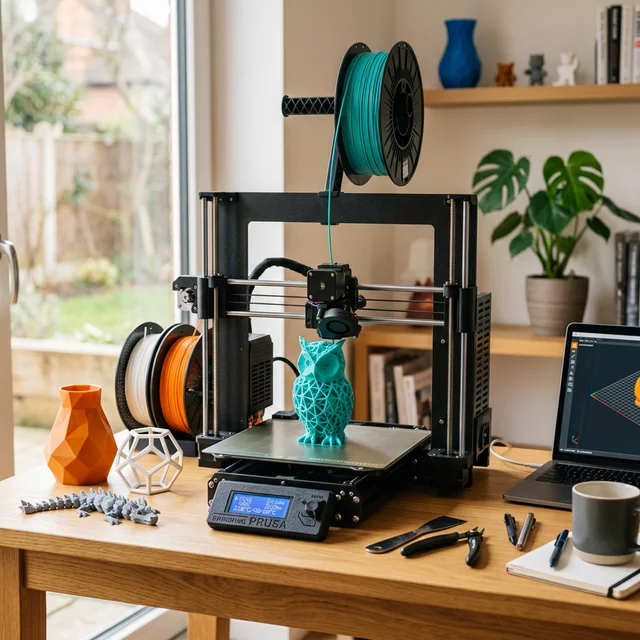
3D printing - also known as additive manufacturing - is a process that creates physical objects from digital files. A printer builds the object layer by layer, depositing material (usually a plastic filament) until the full shape is formed.
Think of it like a very precise hot glue gun controlled by a computer, drawing one thin layer at a time and stacking them on top of each other. The result is a solid, three-dimensional object that matches your digital design.
Do I Need My Own Printer?
Not at all. That's precisely why services like Instant 3D Prints exist. You upload your 3D file, pick your material and size, and we print it for you on professional-grade machines. No equipment, no learning curve, no failed prints to troubleshoot.
Think of it like photo printing. You don't need to own a professional photo printer to get high-quality prints - you send the file and get the result delivered to your door.
What File Formats Do You Need?
To get something 3D printed, you need a 3D model file. The most common formats we accept include:
- STL - The most widely used format. Almost every 3D modelling tool can export to STL.
- OBJ - Supports colour and texture information, useful for multi-material prints.
- 3MF - A newer format that packages everything (model, colours, materials) into one file.
- STEP - Common in engineering and CAD applications, preserving precise geometry.
- GCODE - Pre-processed files ready for specific printers (advanced users).
Where Do 3D Files Come From?
There are three typical routes:
- Design your own - Use free tools like Tinkercad, Fusion 360, or Blender to create a custom model from scratch.
- Download a design - Browse marketplaces like Thingiverse, Printables, or Cults3D for thousands of free and paid designs.
- Commission a design - If you have an idea but can't model it yourself, ask a designer (or ask us - we can point you in the right direction).
How Does Ordering Work?
At Instant 3D Prints, the process is deliberately simple:
- Upload your file - Drag and drop your 3D file onto our homepage. You'll get an instant quote within seconds.
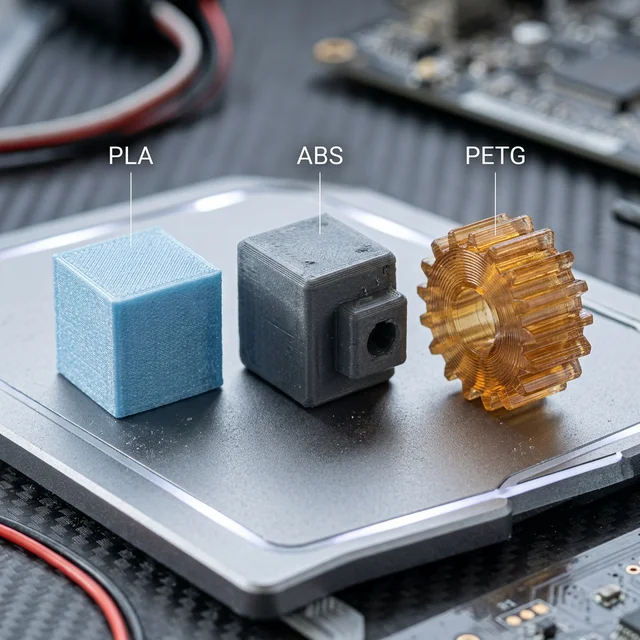
- Customise - Pick your material (PLA, ABS, PETG, resin, and more), choose a colour, and set your size.
- Pay and relax - We handle the rest. Your print is manufactured, quality-checked, and dispatched within 2–3 working days.
Which Material Should I Choose?
This depends entirely on what you're printing. Here's a quick cheat sheet:
| Material | Best For | Avoid If |
|---|---|---|
| PLA | Display pieces, prototypes, figurines | Heat exposure, mechanical stress |
| ABS | Functional parts, enclosures, automotive | Ultra-fine detail |
| PETG | All-purpose, outdoor use, durable items | Very fine detail work |
| Resin | Miniatures, jewellery, ultra-detailed models | Large structural parts |
Want a deeper dive? Read our full guide: PLA vs ABS vs PETG: Which Material Is Right for Your Print?
How Much Does It Cost?
Pricing depends on three main factors:
- Size - Larger prints use more material and take longer, so they cost more.
- Material - Standard PLA is the most affordable. Specialty materials like resin or nylon cost a bit more.
- Complexity - Models with overhangs, fine details, or moving parts may require support structures, which adds to the cost.
The best way to find out? Upload your file and get an instant quote. There's no obligation - you can check the price before committing.
Tips for Your First Print
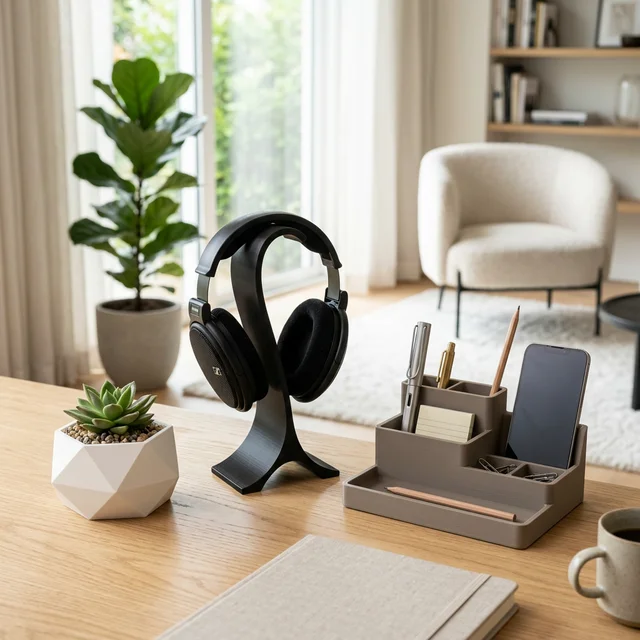
- Start simple - Don't go straight for a complex multi-part assembly. Try something straightforward like a phone stand, keyring, or small figurine.
- Check your model - Make sure your file is "watertight" (no holes in the mesh). Most slicing software will flag errors.
- Think about orientation - How a print is oriented on the build plate affects surface quality. We take care of this for you, but it's worth knowing.
- Allow for tolerances - 3D printing has a tolerance of about ±0.2mm. For snap fits and tight tolerances, build in a little clearance.
Ready to try? Upload your first 3D file on our homepage and see your instant quote. No account needed, no commitment required.