"Should I 3D print this or injection mould it?" It's one of the most common questions we hear from product designers and engineers. The answer depends on your volume, timeline, budget, and design complexity.
The Short Answer
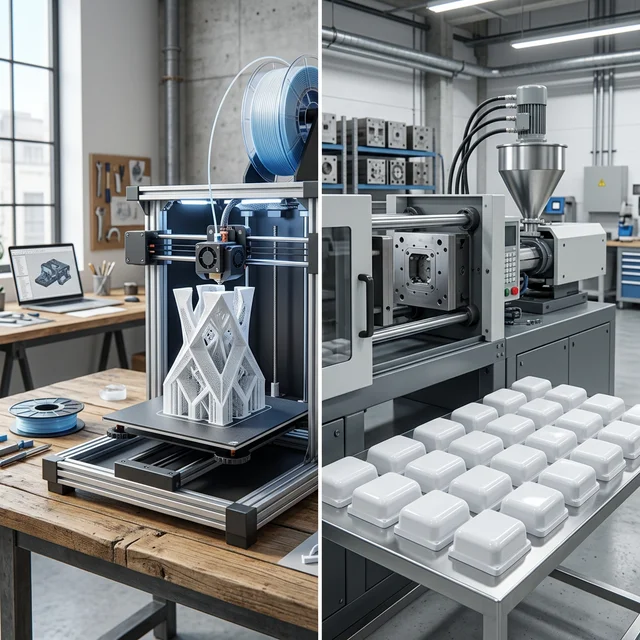
- 3D printing wins for low volumes (1–500 units), complex geometries, rapid iteration, and speed to first part
- Injection moulding wins for high volumes (1,000+ units), simple geometries, and lowest per-unit cost at scale
Cost Comparison
| Factor | 3D Printing | Injection Moulding |
|---|---|---|
| Upfront cost | £0 (no tooling) | £2,000–£50,000+ (mould) |
| Per-unit cost (10 pcs) | £5–£50 | Impractical |
| Per-unit cost (10,000 pcs) | £5–£50 | £0.50–£5 |
| Design change cost | Free (just edit the file) | £500–£5,000 (mould rework) |
| Lead time to first part | 1–3 days | 4–8 weeks |
When to 3D Print
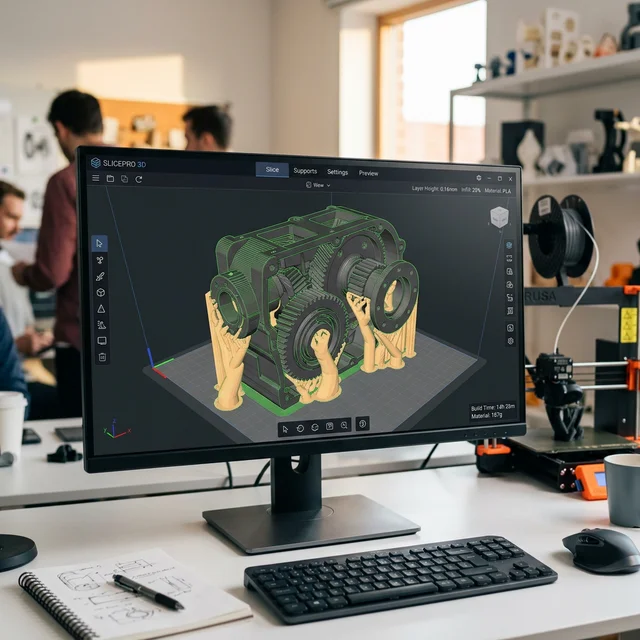
- Prototyping - Validate designs before committing to tooling
- Low volume production - When you need 1–500 identical parts
- Custom/one-off parts - Jigs, fixtures, replacement parts
- Complex geometry - Internal channels, lattice structures, organic shapes
- Speed matters - Need parts in days, not weeks
When to Injection Mould
- High volume - 1,000+ identical parts where per-unit cost matters
- Surface finish - Injection moulding produces smoother, more consistent surfaces
- Material choice - Access to a wider range of engineering-grade polymers
- Design is final - No more iterations or changes expected
The best approach? Start with 3D printing to prototype and validate your design, then switch to injection moulding when you're confident in the design and volume justifies the tooling cost.